MoreExam
1. Question Content...
EXPLANATION
Answer: X - EXPLANATION Content.
Question1: In the figure above, circular regions and represent sets of integers and every integer greater than 2 is in Mor A, or in both. Is the integer 11 in the shaded region?(1) Mrepresents the set of integers greater than 2 that are not prime.(2) Mrepresents the set of odd integers greater than 2.
Question2: Purina her lifetime, when her 1922 book Etiquette was running second only to the Bible in United States sales.Emily Post was ridiculed as a period-piece snob focused on minutiae, even though her book argued against snobbery.
Question3: Daniel: Historically, railroads substantially altered the course of the United States economy, enabling the country to enjoy unprecedented growth in the nineteenth century.Robert: It's true that growth required cheap inland transportation, which railroads provided. But with government support similar to the massive land grants that subsidized rapid railroad expansion, canals and roads could have had the same effect.Which of the following is most likely a point that Robert believes is at issue between Daniel and himself?
Question4: Soil salinization-the process by which soil acquires excess soluble salt, adversely affecting pasture or crop growth-is regarded as Australia's most serious environmental problem. Cope, whose 1958 investigation is considered the earliest survey of salt-affected areas in Victoria, hypothesized that surplus rainwater mobilized soluble salt stored in the permeable layer of soil, causing it to accumulate above an impermeable layer and then discharge downslope or onto a valley floor. In the late 1970s, however, Jenkin identified saline water underground as the main and immediate (though not ultimate) source of the salt, and hypothesized that the spread of salinity resulted from a rise in that groundwater. He attributed the rise to a decrease in coverage by water-absorbing trees and other vegetation at some ill-defined point in Australia's post-settlement history.However, more-recent research suggests there was no rise in post-settlement groundwater levels. Furthermore, soil salinity probably antedated European settlement: early cartographic evidence indicates that some streams were saline when Europeans arrived. Dahlhaus suggests that salt accumulation resulted from marine incursions several million years ago, when parts of Victoria may have been submerged-as well as from transport of salt from the sea by wind and rain. Dahlhaus also notes that various minerals dissolved in groundwater by weathering may have produced salt.The passage most strongly suggests that the author agrees with which of the following?
Question5: What is the value of ac(1 - b) ?(1) bc = c(2) ac = 1
Question6: Psychologist: People tend instinctively to impose patterns on events even when such patterns are not really present. If early humans believed that a rustle in the grass indicated a dangerous predator when it was just the wind, they were more likely to survive than if they believed that it was just the wind when a dangerous predator was there. Thus, in a world of split-second interactions between predators and prey, a person who made an error of the first type was more likely to survive than a person who made an error of the second type.So the tendency to make the first type of error is probably due to__________.Which of the following would, if true, most logically complete the psychologist's argument?
Question7: Under laboratory conditions, fruit flies can learn to respond to odors that elicit no response from them in nature. Mutant fruit flies that cannot produce a certain enzyme are, however, incapable of such learning. These mutant flies respond to other odors just as ordinary fruit flies do.Thus it is unlikely that the enzyme's absence impairsthe fruit flies' perception of odors, since presumably fruit flies would not have an enzyme that was needed only for the perception of odors that fruit flies do not respond to in nature. Given that many researchers believe that this enzyme is somehow involved in the process of forming memories, what the enzyme's absence probably impairs is the fruit flies' ability to learn.In the argument given, the two boldfaced portions play which of the following roles?
Question8: At his high school, Marlon is the only member of the track team who is also a member of the tennis team. His weight of 68.5 kilograms is the median weight of the 9 members of the track team and is also the median weight of the 7 members of the tennis team. If the total weight of the members of both teams is 960 kilograms, then the median weight of the members of both teams is how many kilograms greater than the average (arithmetic mean) weight of the members of both teams?
Question9: Parasitic wasps propagate by injecting their eggs into a caterpillar that then becomes paralyzed as the eggs inside develop into wasp larvae. The wasp larvae kill the caterpillar host as they feed on it, form cocoons, and finally develop into wasps. In attempting to discover how such wasps detect the presence of the caterpillar hosts that are so critical to the wasps' propagation, researchers have uncovered an intriguing defense mechanism developed by the plants on which the caterpillars feed.When chewed on, many plants release volatile compounds from both damaged and undamaged tissues. When these compounds are toxic to the insects that feed on the plants, they can help defend the plants from such attacks. However, the plants on which the wasps' caterpillar hosts feed have evolved an even more complex defense: the caterpillar-infested plants appear to release volatile chemicals that attract parasitic wasps, which then prey on the caterpillars. Scientists originally suspected that the wasps were attracted by an odor, reminiscent of cut grass, that is released as the caterpillar feeds, but a recent study suggests that a different set of volatile attractants is involved. In this study, when researchers used a razor blade to mimic caterpillar damage on the leaves, only grassy odors were emitted, not the volatile compounds that attracted wasps.However, when oral secretions from the caterpillars were applied to these damaged leaves, the leaves released the wasp attractants several hours later. Further tests revealed that oral secretions placed on the razor-damaged leaves stimulated the release of such attractants, making the plants as attractive to wasps as plants that had suffered actual caterpillar damage. These results suggest that chemicals from the caterpillar must be present for these attractants to be released and that unlike the grassy scent, which emanates only as the caterpillar feeds on the plant, the wasp attractants are produced several hours after the attack and persist for several hours, perhaps days. Researchers have launched additional studies to determine whether the wasps' capacity to prey on caterpillars can be enhanced to the extent that the wasps could be used as a natural pesticide to "police" plants and protect them from crop-destroying caterpillars.The author implies that if, in the experiment described in the second paragraph, the parasitic wasps had been drawn to the plants after they had been damaged by a razor blade but without application of oral secretions from the caterpillar, then scientists would likely have concluded which of the following?Wasps are attracted to the plants by the grassy odor released as the caterpillars feed on the plants' leaves.
Question10: By the end of next year, analysts have predicted, the widespread use by online businesses of the new security protocols proposed for credit cards.
Question11: Despite overall physiological bilateral symmetry, many species exhibitlateralized biases, i.e., preferences for right- or left-oriented behavior. When approaching prey, for example, some predator species favor their right eye; some prey species respond more quickly when their left eye detects a predator. Similar behavioral asymmetries occur in humans. Most notable is right- and lefthandedness; less notable is the tendency to turn right when entering a room.Paul Farnsworth found that more successful students tended to choose seats near the front, a little to the right. He argued that external factors such as teacher location might have affected this lateral bias. But it is now known that processing differences between the two brain hemispheres can also contribute to behavioral asymmetries.George Karev found that when presented with a movie theater seatingdiagram, right-handed people were more likely than left-handed people to choose a seat on the right, facing front. But he hypothesized that, since the right hemisphere processes visuospatial and emotional information, the people who chose right-side seats did so because that would put the screen in their left visual field, optimizing information flow to the right hemisphere.Although the right hemisphere is thought to be dominant in processingemotion, some evidence suggests that the left hemisphere plays a role. The valence model proposes that the left and right hemispheres process positive and negative emotion respectively, while the approach-withdrawal model posits that the left hemisphere processes emotion expressed in approach behavior and the right hemisphere processes emotion expressed in withdrawal behavior.Victoria Harms and colleagues suggested that since a paper seating plan was used in the theater-seating studies by Karev and others, the exhibited preference might be due simply to handedness: people choose the same side of the paper as their favored hand. Consequently, the Harms research was designed to study choices in an actual movie theater. Also, hoping to distinguish between various explanations, they studied seating choices for comedies (presumed to contain Positive emotional content), dramas (presumed to contain negative emotional content), and documentaries (presumed to have balanced emotional content).They found significant-though not universal-preference for seats on the right, facing front, regardless of movie genre and of handedness.Which of the following statements concerning the valence model and the approach-withdrawal model most accurately reflects information provided in the Passage?
Question12: If the closing price of stock X on the first trading day last year was $10, was the closing price of stack X at least $5 on each of the trading days last year?(1) Last year, the highest closing price of stock X was twice the lowest closing price of stock X.(2) The highest closing price of stock X last year was $16.
Question13: Manufacturers and retailers tend to look askance at gray markets, where products are sold at cut-rate prices outside their authorized distribution channels. Manufacturers fear that gray markets will undercut margins and tarnish brand names. Retailers fear that they will siphon away customers and erode prices.A new study indicates, however, that gray marketing actually benefits manufacturers and retailers in markets that meet two criteria: first, sharp differences exist in consumers' price sensitivity; second, large numbers of consumers are price-insensitive. In such markets, the low prices of the gray market will attract the most price-sensitive customers. The authonzed channels will then compete only for the remaining customers-those who are insensitive to price but sensitive to service.When that happens, the structure of competition and the economics of the market shift. The authorized retailers, freed from having to cater to the bargain hunters, can raise their prices and focus on service. If the concentration of price-insensitive shoppers is high enough, the resulting increase in prices will more than offset the loss of sales to the bargain hunters. The margins and profits of the authorized retailers will increase, and manufacturers will, as a result, be able to boost their wholesale prices.The primary purpose of the passage is to
Question14: Despite overall physiological bilateral symmetry, many species exhibitlateralized biases, i.e., preferences for right- or left-oriented behavior. When approaching prey, for example, some predator species favor their right eye; some prey species respond more quickly when their left eye detects a predator. Similar behavioral asymmetries occur in humans. Most notable is right- and lefthandedness; less notable is the tendency to turn right when entering a room.Paul Farnsworth found that more successful students tended to choose seats near the front, a little to the right. He argued that external factors such as teacher location might have affected this lateral bias. But it is now known that processing differences between the two brain hemispheres can also contribute to behavioral asymmetries.George Karev found that when presented with a movie theater seatingdiagram, right-handed people were more likely than left-handed people to choose a seat on the right, facing front. But he hypothesized that, since the right hemisphere processes visuospatial and emotional information, the people who chose right-side seats did so because that would put the screen in their left visual field, optimizing information flow to the right hemisphere.Although the right hemisphere is thought to be dominant in processingemotion, some evidence suggests that the left hemisphere plays a role. The valence model proposes that the left and right hemispheres process positive and negative emotion respectively, while the approach-withdrawal model posits that the left hemisphere processes emotion expressed in approach behavior and the right hemisphere processes emotion expressed in withdrawal behavior.Victoria Harms and colleagues suggested that since a paper seating plan was used in the theater-seating studies by Karev and others, the exhibited preference might be due simply to handedness: people choose the same side of the paper as their favored hand. Consequently, the Harms research was designed to study choices in an actual movie theater. Also, hoping to distinguish between various explanations, they studied seating choices for comedies (presumed to contain Positive emotional content), dramas (presumed to contain negative emotional content), and documentaries (presumed to have balanced emotional content).Which of the following statements concerning the valence model and the approach-withdrawal model most accurately reflects information provided in the passage?
Question15: When new regulations were imposed on businesses selling in the same markets as Acme Inc. and the demographics began to change unfavorably for its main product: there was very little that it could have done different in the short term.
Question16: Even those residents who had not been born in the region, nor were their ancestors, had become fully integrated into the local community.
Question17:
Question18:
Question19: A)B)C)D)E)
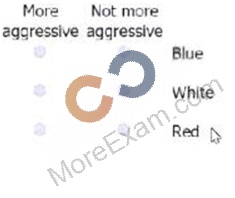
Question20: The color red has been shown to induce greater aggression in people than the color blue. Researchers conducted a study to determine whether such colorinduced aggression could influence the amount that consumers were willing to pay for an identical product in online auction and online negotiation scenarios.The researchers photographed a single item against each of four background colors: blue, gray, white, and red. Using a computer, each participant in the study viewed the item against exactly one of the four background colors. Half of the participants were told the item was up for auction and were asked to submit their highest bid for the item. The other half of the participants were told to negotiate a price with the seller and were asked to offer the highest amount that they would be willing to pay for the item.The researchers expected that participants who viewed the red background would typically behave more aggressively than those who viewed the blue background. Among the auction group, the researchers hypothesized that more aggressive participants would submit higher bids as they tried to beat other potential bidders. Among the negotiation group, the researchers hypothesized that more aggressive participants would make lower offers as they tried to compete against the seller to get the best deal.Assuming the researchers' hypothesized link between offers and aggression is correct, for each of the following background colors select More aggressive if, on average, participants in the negotiation group in the study behaved more aggressively when the product was displayed with that background color than the participants did when the product was displayed with a gray background.Otherwise, select Not more aggressive.
Question21: The Red Balloon Challenge was an experiment aimed at determining how quickly widely disbursed information could be gathered using social media. Competitors tried to locate 10 red weather balloons that had been tethered above random locations around the world in return for a $40,000 prize. The winning team located all of the balloons in just 9 hours, using an incentive-based strategy to encourage information sharing; The first person to send the correct coordinates of a particular balloon to the team received $2,000, but whoever recruited that person received $1,000, and the recruiter's recruiter received S500, and that person's recruiter received $250.Select for 3 payments per balloon the amount of the prize money that the winning team would have remaining if they had to pay 3 people for each balloon located, and select for 4 payments per balloon the amount of the prize money that the winning team would have remaining if they had to pay 4 people for each balloon located.Make only two selections, one in each column.
Question22:
Question23: The following is based on an article published in 2012.Most linguists believe proto-Indo-European, the ancestor of all Indo-European languages, was the language of chariot-driving pastoralists who spread through Eurasia from steppes north of the Black Sea about 4,000 years ago. But a competing theory is that proto-Indo-European was spoken by farmers in Anatolia (Asia Minor) about 9,000 years ago, and spread from there along with agriculture.To evaluate these hypotheses, researchers statistically compared IndoEuropean languages' vocabularies.Languages with more similar vocabularies areprobably more closely related, sharing more recent common ancestors.Combining the vocabulary statistics with the known dates when certain languages split, and with their known geographical ranges, a computer calculated the most likely relationships among all Indo-European languages and concluded that protoIndo-European probably originated in Anatolia 9,000 years ago.Disputing this conclusion, skeptics argue that most Indo-European languages are similar in their words pertaining to chariots and wagons, suggesting protoIndo-European split into daughter languages only after chariots and wagons were invented. No archaeological evidence indicates that chariots and wagons existed before 5,500 years ago. Furthermore, proto-Indo-European had words for "horse" and "bee" and lent many words to proto-Uralic, the mother language of Finnish and Hungarian. The steppes north of the Black Sea were far closer than Anatolia to areas where proto-Uralic was spoken, and had more abundant wild horses and bees.The author of the passage most clearly agrees with the claim that the ancestor of all Indo-European languages
Question24: Each of the 75 employees at @ certain company works in exactly one of the company's 3 departments (Departments X, Y, and Z). Exactly 20% of the employees work in Department X, and 10 fewer employees work in DepartmentY than work in Department Z.Based on the information provided, select for Departinent Yand Department Zthe numbers of employees who work in Department Y and Department Z.Make only two selections, one in each column.
Question25: A)B)C)D)D)
Question26: United States Geological Survey scientists have found that a cooling in Pacific Ocean temperatures led to increases in ecologically threatening phytoplankton blooms in San Francisco Bay, California. The declining temperatures took place off the coast of California between 1999 and 2004. The occurrence of these blooms is surprising because such blooms are normally associated with increases in the amount of nutrients, such as nitrogen and phosphorus, entering estuaries from such sources as wastewater treatment plants and agricultural fields. In this case, the bay's phytoplankton blooms occurred during a period of decreasing nutrient concentration and inputs.The scientists discovered the effects of the cold Pacific temperatures by using biological and water-quality data collected over twenty-five years. The colder temperatures caused changes in the types, abundance, and migration patterns of marine life into the San Francisco Bay from coastal ocean waters. For example, marine life, such as fish, shrimp, and crabs, migrated to the warmer waters that are found in the bay.The migrations increased the numbers of predators such as bay shrimp and Dungeness crabs that eat filter feeders, such as clams. Clams can filter large quantities of phytoplankton from the bay's water, which can prevent phytoplankton blooms. With the increase in predators, there was a corresponding decrease in clam populations and an increase in phytoplankton.The scientists discussed in the passage would most likely agree with which of the following statements about attempting to limit phytoplankton blooms in an estuary by placing restrictions on discharges from wastewater treatment plants and runoff from agricultural fields?
Question27: The company's long-term planning statement, particularly the sections condemning temporary price adjustments and new customer-service approaches, were criticized for being insufficiently responsive to the current business climate.
Question28: A quantity of solution that is 3% salt by volume was mixed with a quantity of solution that is 9% salt by volume to produce a quantity of solution that is 4% salt by volume. How many liters of the 9% solution were used?(1) The quantity of 3% solution was 5 times the quantity of 9% solution.(2) The quantity of 4% solution produced was 150 liters.
Question29: Under United States law, a distinctive package design can be legally protected against copying. Lorex shampoo, a leading brand, is packaged in a triangular-shaped bottle with a gold label. A major pharmacy chain has introduced a similar, less expensive shampoo in similarly shaped bottles with plain black-and-white labels carrying the chain's name. Though the triangular shape is distinctive, the manufacturer of Lorex has not legally challenged its use for the chain's shampoo.Which of the following, if true, provides the strongest reason for the manufacturer of Lorex not to challenge the chain's use of the triangular package design?
Question30: A port city needed to deepen its 5,000-foot-long and 75-foot-wide shipping channel from a depth of 15 feet to a depth of 25 feet. The dirt that was removed from the channel was shipped to a landfill, which accepted735,000 cubic feet of the dirt. Approximately what percent of the dirt that was removed from the channel was accepted by the landfill?
Question31: Buoyed by stability and economic growth at home, Russia has developed a foreign policy that seeks to reestablish its place as a key actor on the world stage.
Question32: Members of many primate species approach an opponent shortly after conflict and initiate behaviors such as embracing, grooming, or huddling-a phenomenon researchers call postconflict reconciliation. Existing research, however, suffers from several shortcomings. The variability between groups of the same species is rarely addressed; the majority of studies investigate only a small fraction of the pairings that exist in a given group; and almost all reports are restricted to animals in captivity.In an attempt to address some of these shortcomings, Sommer et al. recently conducted a study of postconflict reconciliation in wild Hanuman langurs, a species of colobine monkey. They observed rates of postconflict reconciliation much lower than would be expected based on previous research, and found that over 80 percent of all pairings exhibited no postconflict affinity whatsoever. The rarity of friendly postconflict reunion in wild langurs draws attention to the possibility that conflicts are modulated through avoidance. The option of temporarily avoiding contact with opponents is not easily available to captive primates, and certainly not to the extent present in the wild. Still, studies of postconflict behavior of primates in captivity remain valuable:above all, they demonstrate the flexibility of nonhuman primates in various environments. It is likely, however, that the reported frequency of reconciliation among primates is artificially inflated by the conditions of captivity.Which of the following is a research shortcoming mentioned in the passage that is not addressed in the information provided about Sommer's study?
Question33: If a committee of 3 men and 3 women is to be selected from a group of 7 men and 7 women, how many different committees are possible choices?
Question34: Art expert: If a painting is from the Hudson River School of the mid-nineteenth century United States, it will display a romantic reverence for landscape, portraying pastoral scenes in which humans and nature coexist peacefully. The painting that was recently discovered in the attic of the old town hall dates from the 1850s and portrays a pastoral landscape in which two couples are having a peaceful picnic. So the painting must be from the Hudson River School.The critic's argument is flawed in that it
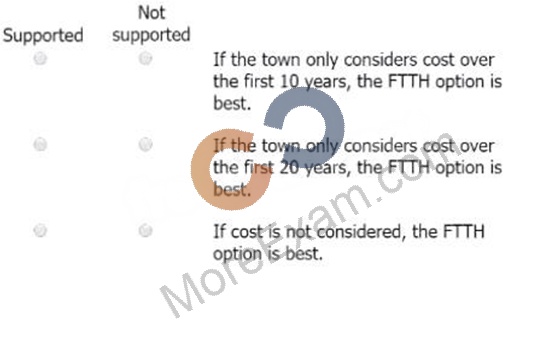
Question35: West River Glen is deciding which network architecture should replace its old copper telephone lines. The town will replace 300 miles of Outside Plant (OSP) cable that will serve approximately 2,500 homes.The first option is to install a Fiber to the Home (FTTH) system architecture that uses fiber-optic cable to transmit signals from the source to each home. The advantages of this architecture include greater bandwidth capabilities, less signal loss, and slightly lower new-cable deployment costs than the second option. Hybrid Fiber-Coax (HFC).An HFC network integrates fiber-optic cables and devices with coaxial cables.This will cost the town substantially less money for internal equipment and for customer installations.However, the coaxial cable does not last as long as fiberoptic cable and will thus need to be replaced more frequently, resulting in higher long-term maintenance expenses.The town believes that either the FTTH or HFC architectures will be capable of serving the communities' data and television needs for the next 30 years.For each of the following statements, select Supported'if the statement is supported by the information given.Otherwise, select Not supported.
Question36:
Question37: According to the production-smoothing buffer stock model, inventories of a firm's products allow it to supply unexpected demand without having to adjust output immediately. When costs per additional unit produced are increasing, using inventory to smooth production is efficient as long as the savings from not adjusting production exceed the cost of holding inventory. Inventory acts as a buffer stock, absorbing increases or decreases in demand while production remains relatively steady.If firms are smoothing production, then sales should vary more thanproduction. If inventories are used as a buffer stock, then high-frequency changes in inventory should be in the opposite direction to sales. Empirical research using aggregate data does not confirm this expectation, however; production varies more than sales, and changes in inventory and sales tend to vary in the same direction. Thus either the production-smoothing buffer stock model is incorrect, or other factors ere preventing empirical confirmation of the smoothing effect.Most of the research that finds contradictions of production smoothing uses seasonally adjusted aggregate data concerning inventory and sales. It is possible that firms actually do use inventory to smooth production, but the research has failed to detect signs of this activity because the data are too highly aggregated over many firms. But even research at the level of individual companies has failed to confirm the model.The passage mentions "high-frequency changes in inventory" (see bolded text) in order to
Question38: It can be inferred from the passage that if Cope's hypothesis were correct, which of the following would most likely be true concerning salt-affected areas in Victoria?
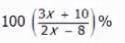
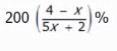
Question39: One year ago a window washing service charged S100 for setup and an additional $30 per hour for on-site washing. This year the company charges $20 for setup and an additional $50 per hour for on-site washing.Which of the following is equivalent to the percentage change from last year to this year that the company charges for setup and x hours of on-site washing?A)B)C)D)E)
Question40: Two positive integers, A and B, each yield the same remainder when divided by 4. Furthermore, A is less than IS. In the table, select values for A and 5that are jointly consistent with the given information. Make only two selections, one in each column.
Question41: Despite overall physiological bilateral symmetry, many species exhibitlateralized biases, i.e., preferences for right- or left-oriented behavior. When approaching prey, for example, some predator species favor their right eye; some prey species respond more quickly when their left eye detects a predator. Similar behavioral asymmetries occur in humans. Most notable is right- and lefthandedness; less notable is the tendency to turn right when entering a room.Paul Farnsworth found that more successful students tended to choose seats near the front, a little to the right. He argued that external factors such as teacher location might have affected this lateral bias. But it is now known that processing differences between the two brain hemispheres can also contribute to behavioral asymmetries.George Karev found that when presented with a movie theater seatingdiagram, right-handed people were more likely than left-handed people to choose a seat on the right, facing front. But he hypothesized that, since the right hemisphere processes visuospatial and emotional information, the people who chose right-side seats did so because that would put the screen in their left visual field, optimizing information flow to the right hemisphere.Although the right hemisphere is thought to be dominant in processingemotion, some evidence suggests that the left hemisphere plays a role. The valence model proposes that the left and right hemispheres process positive and negative emotion respectively, while the approach-withdrawal model posits that the left hemisphere processes emotion expressed in approach behavior and the right hemisphere processes emotion expressed in withdrawal behavior.Victoria Harms and colleagues suggested that since a paper seating plan was used in the theater-seating studies by Karev and others, the exhibited preference might be due simply to handedness: people choose the same side of the paper as their favored hand. Consequently, the Harms research was designed to study choices in an actual movie theater. Also, hoping to distinguish between various explanations, they studied seating chaices for comedies (presumed to contain positive emotional content), dramas (presumed to contain negative emotional content), and documentaries (presumed to have balanced emotional content).They found significant-though not universal-preference for seats on the right, facing front, regardless of movie genre and of handedness.According to the passage, Karev's hypothesis suggests which of the following about people's choices of seating in movie theaters?
Question42: Store S's gross profit from a certain product is 40 percent of the store's revenue from the product- The store's gross profit from the product is what percent of the store's cost for the product?
Question43: A series of financial reports in recent months has portrayed an economy that is slowing sharply, thus raising expectations that the Federal Reserve v.ill be comp.. -xi to cut interest rates in order to avert a recession.
Question44: Machine X caps 20 bottles of soda per minute, and machine Y caps 60 bottles of soda per minute. If both machines start operating at the same time and at their respective constant rates, in how many seconds will machine Y have capped 12 more bottles of soda than machine X ?
Question45: Does the positive integer n have at least four positive prime factors?
Question46: Of the coins in a certain collection, 30 percent were issued more than ten years ago and 45 percent are foreign.Of the foreign coins, 20 percent were issued more than tenyears ago. If there are 1,500 coins in the collection, how many are foreign coins that were issued ten years ago or less?
Question47: Which of the following most logically completes the argument?Many advocate cost-benefit assessment of environmental policies. Although some costs and benefits are already in monetary terms, others, such as effects on the quality of people's lives, are not. It has been proposed that these costs and benefits be assigned monetary values based on what people say they would pay to avoid or gain them.However, while this appears to treat everyone's interests alike, it is biased against the interests of certain groups because
Question48: If k is a constant, what is the slope of the line with equationA)B)C)D)E)
Question49: Elena has worked as a real estate agent for exactly 3 years-Years 1, 2, and 3. In Year 1, she sold exactly 16 properties. She sold more proper and more properties in Year 3 than in Year 2. The average (arithmetic mean) number of properties she sold per year for the 3 years was 19.Select a number for Year 2 and a number for Year 5 that could be the total numbers of properties Elena sold in Year 2 and in Year 3, respectively, so that the selections are jointly consistent with the information provided.Make only two selections, one in each column.